Bread Through the Generations: A Love Letter to Homemade Baking
There’s a reason bread has been baked across every culture, every continent, and every generation. It’s more than food—it’s comfort, heritage, nourishment, and memory.
When I think of bread, I don’t just think of recipes or techniques. I think of the women who taught me by example long before I ever kneaded my own dough.
How I Learned to Love Bread
Nana’s Yeast Rolls
Growing up, my Nana was famous for her yeast rolls—the ones she baked for big family suppers in buttery, soft clusters that pulled apart like clouds. By the time I came around, she had made those rolls so many times that I think she probably could have made them in her sleep. She made them the way grandmothers always seem to do: a cup of this and a pinch of that. I remember watching her dump the bowl of risen dough onto the counter to carefully pinch off little dough balls and shape into rolls without deflating them. I was delighted the day she called me into the kitchen to share her recipe and techniques. That was the day I fell in love with baking.
My Mom’s Flour Tortillas
My mom, on the other hand, didn’t bake rolls—she made flour tortillas, the softest and most delicious tortillas I have ever eaten. They were a staple in our house and she would make them several times a week. The best is when we would have some left over after the meal. We’d tear them apart, steam rising from the center, and eat them with butter and honey. It was the ultimate treat—simple and perfect.
My From-Scratch Biscuits as a New Mom
When I became a mother myself and challenged myself to learn to make as much food as I could from scratch, the first bread I learned to master was rolled biscuits. I was determined to make them by hand and from scratch. Biscuits from the can or freezer can’t compare with fresh from scratch biscuits. Over the years, I have played around with the recipe and my technique. These biscuits have became a staple in our house. I have made them so many times that I’ve memorized the recipe and can whip up a batch in a matter of minutes.
These three breads—yeast rolls, tortillas, and biscuits—were more than recipes. They are a foundation in my kitchen, the launching pad for everything I have baked and cooked over the years. Bread connects me with my family and with all of those who have been baking bread for thousands of years.
A Little History of Bread
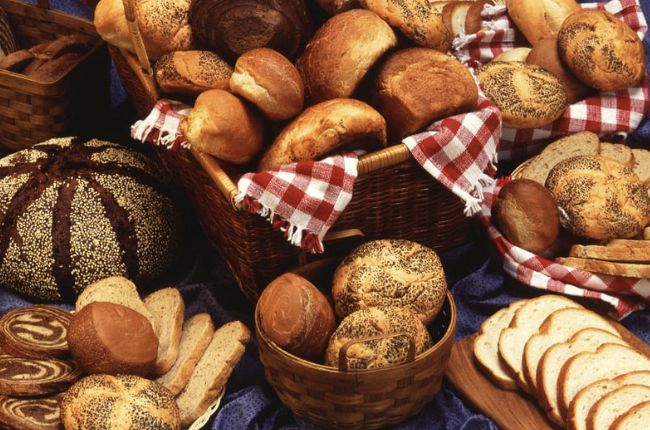
Bread has been made for thousands of years. Ancient grains were ground by hand and mixed with water to make flatbreads cooked over fire. Eventually, the ancient Egyptians discovered wild yeast in fermented breads to make the first risen loaves. Every culture has some variation that is an everyday staple: naan, sourdough, tortillas, brioche, pita, baguettes, roti.
For most of human history, people have made their own bread. It was until the last one hundred years with industrialization and inventions like automatic bread slicers that we traded our bread baking heritage in for the convenience of the stuff we now buy from the grocery store shelves.
Everyone used to know how to make bread. It was a skill that was observed daily in home kitchens and passed down for generations. And it is sad that some of that has been lost. Many cookbooks, television shows, and food blogs have convinced home cooks that bread is complex and too time consuming to be made at home by the average person, but that is not the case.
The 3 Main Kinds of Bread
There are dozens of variations, but at the heart of it, most bread falls into one of three categories:
1. Yeast Breads- These rely on commercial yeast to rise. Think sandwich loaves, dinner rolls, cinnamon rolls, and pizza dough. They’re predictable and beginner-friendly.
2. Sourdough Breads- These breads are made with wild, natural yeast cultures. They’re flavorful, nourishing, and incredibly versatile.
3. Flatbreads- These breads that require no rise like tortillas, pita, and naan. They are quick, budget-friendly, and are some of the first breads ever baked.
Why Homemade Bread Matters
Homemade bread tastes like nothing you can buy in a store. It fills your home with warmth and makes a simple meal feel special.

The Benefits of Baking with Fresh-Milled Flour
If you’ve ever baked with fresh-milled flour, you already know it smells different. It feels different. And it tastes different. Fresh flour is one of those simple changes in your kitchen that transforms your baking completely—not by being fancy or complicated, but by getting back to what flour was always meant to be.
Most store-bought flour has been processed, stripped, and shelf-stabilized. Fresh flour is alive. It’s full of flavor, nutrients, texture, and color that commercial flours just can’t match.
Here are the biggest benefits of baking with fresh-milled flour:
🌾 1. More Nutrition (Yes, a LOT More)
Whole grains naturally contain vitamins (especially B vitamins), healthy oils, minerals such as iron, magnesium, zinc, fiber, and protein. Those nutrients begin to degrade quickly after milling—sometimes within days. Commercial flours are often heat treated, bleached or enriched, and stored for months. Fresh-milled flour keeps every part of the grain intact: bran, endosperm, and germ. That means you’re baking with flour the way our great-grandparents did—full of the stuff your body actually needs.
🍞 2. Superior Flavor & Texture
Fresh flour tastes like the grain it came from, nutty, sweet, rich, and aromatic. Different grains actually have personality:
Hard white wheat for soft sandwich bread
Red wheat for hearty loaves
Soft white wheat for delicate pastries
Spelt for rich and nutty baked treats
Once you taste it (and smell it) , you never go back.
💪 3. Better Digestibility
Many people who struggle with store-bought bread can tolerate homemade bread made with fresh-milled flour. Why? Because you are getting the full nutrition from the grains without any commercial additives. Fresh flour supports natural digestion instead of fighting it.
🥖 4. Better Rise & Crumb
Because the flour is fresh, the natural oils and proteins are still active which helps the dough rises higher resulting in a softer and lighter crumb. The crust develops beautifully Fresh flour doesn’t just make healthier bread—it makes better bread.
💰 5. Cost-Effective & Sustainable
Buying whole grains in bulk is almost always cheaper than premilled flour. I buy my grains in 25 lb bags that I then store in food grade buckets for freshness. A single bucket of wheat berries costs about $20 and can be stored for more than 20 years in an airtight container, not that it lasts that long around our house.
❤️ 6. Fresh-Milled Flour Fits a From-Scratch Lifestyle
Fresh flour fits beautifully into that rhythm of slower more intentional way of life. It’s a small switch in your kitchen that can make a big impact.
How to Fit Bread Baking Into Daily Life
People often say, “I’d bake bread if I had time.” But I have found that fresh baked bread doesn’t take more time—it just takes different time.
Here are real-life ways to make it work:
Mix dough while you’re making breakfast and let it rise during the day.
Keep a favorite recipe in your rotation so you can make it without thinking.
Bake double and freeze extras.
Start with flatbreads and biscuits—no rising required.
Use a stand mixer if you want to save your hands.
Start small: pizza dough is a perfect gateway.
Bake bread around your life—not the other way around. Start with one recipe until you master it and work it into your regular weekly rotation. Then add other recipes to your repertoire as you gain confidence.
My Go-To Recipes
These are the recipes that live in my kitchen:
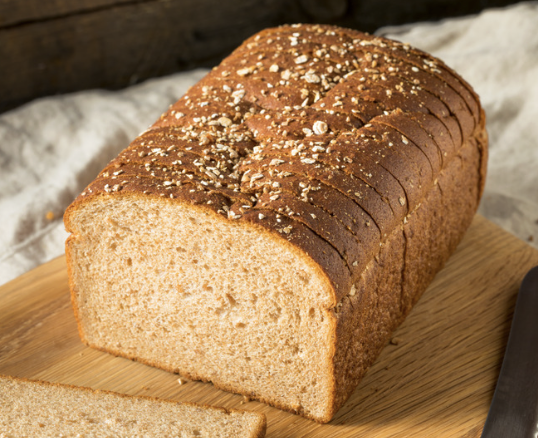
🍞 Honey Oat Sandwich Loaf
Ingredients:
6 cups flour
3 cups Water, Lukewarm
1 1/2 cup Rolled Oats
3 tbsps Honey
2 tsps Salt
3 tsps Active Dry Yeast
Instructions:
1.Preheat oven to 375°F. In a large bowl, combine bread flour, water, oats, and honey. Mix together. Once all ingredients come together to form a dough, cover with a towel and let the dough sit for 30 minutes.
2. Add yeast and salt to the dough and knead for 5 minutes. Cover with a towel and allow dough to rest again for 30 minutes to an hour or until doubled.
3. Spray a 9×5 loaf pan with oil and add dough to the pan. Brush top of dough with 1 tsp of melted honey and sprinkle oats on top. Bake for 50 minutes to 1 hour, until golden brown. Allow bread to cool completely before slicing.
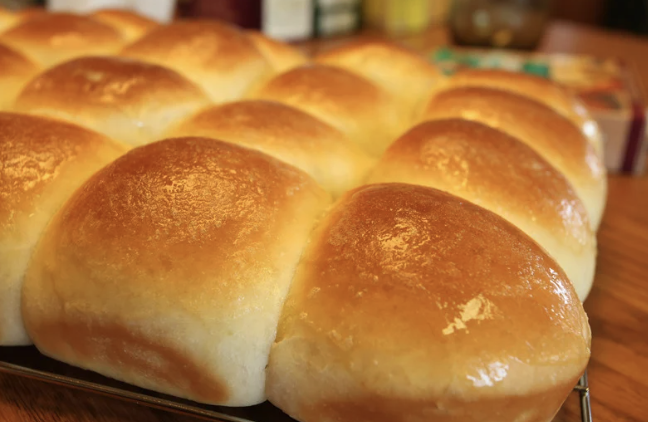
🥖 Nana’s Yeast Rolls
Ingredients:
2 cups warm water
2 packets of active dry yeast
1/2 cup sugar
2 tsps salt
1/4 cup shortening
1 egg
6 cups flour
Instructions:
Activate Yeast. Mix warm water, yeast, and sugar. Let sit 5–10 minutes until foamy.
Mix the Dough. Stir together flour and salt. Add yeast mixture, shortening, and egg. Mix to form dough. Knead 5 - 7 minutes.
Place dough in oiled bowl. Cover and rise 1 hour or until doubled.
Turn risen dough out onto counter and gently pinch off balls of dough, being careful not to deflate. Place in a greased pan. Cover with a towel and let rise 1 hour or until doubled.
Bake at 350°F for 15-20 minutes or until rolls begin to turn golden brown. Remove from oven and brush with melted butter.
**Bonus** Use the same recipe to make cinnamon rolls. After first rise, roll out and cover with brown sugar, cinnamon, and melted butter (optional: raisins and pecans). Roll into a log and slice into individual rolls. Place in a greased pan and let rise on counter until doubled or in the fridge overnight. Bake at 350 °Funtil golden. Top with powdered sugar icing.
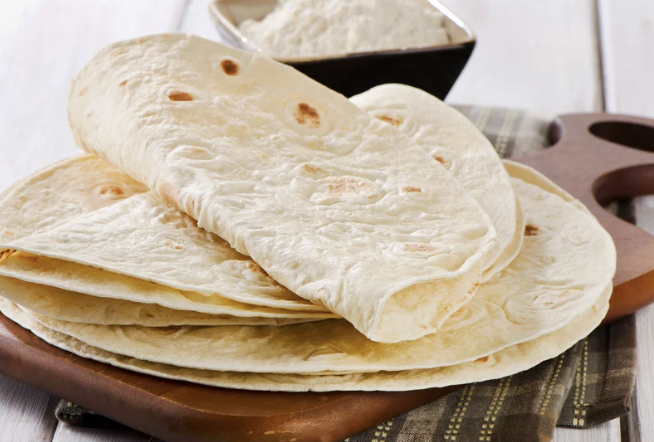
🌮 Mom’s Flour Tortillas
Ingredients:
3 cups flour
1 tsp baking powder
1 tsp salt
⅓ cup oil, lard, or softened butter
1 cup warm water (plus a splash more if needed)
Instructions:
Mix dry ingredients. In a large bowl, whisk together flour, baking powder, and salt.
Add oil, lard, or butter. Mix with your fingers until the texture resembles coarse crumbs.
Slowly add hot water and mix until a soft dough forms. If it feels too dry, add 1 tablespoon of water at a time. Turn dough onto a clean surface and knead for 3–4 minutes, until smooth and elastic.
Divide the dough into 8-12 portions and roll each into a ball. Cover and let rest 20–30 minutes. This helps the tortillas roll out thin and tender.
On a lightly floured surface, roll each ball into a thin circle. Don’t worry if they aren’t perfect circles—homemade tortillas have personality! Heat a cast-iron skillet or pan over medium-high heat. Cook each tortilla for 30–60 seconds per side. They should puff, bubble, and get golden brown spots. Stack tortillas in a clean kitchen towel to keep warm and soft until serving.
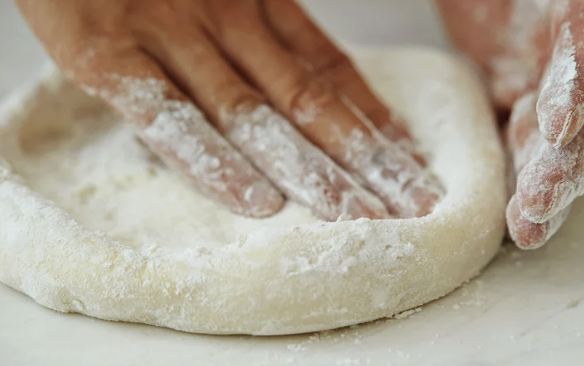
🍕 Homemade Pizza Dough
Ingredients:
1 ¼ cups warm water
2 ¼ tsp active dry yeast
1 tsp sugar or honey
3 cups all-purpose or bread flour
2 tbsp olive oil
1 ½ tsp salt
Instructions:
Activate Yeast. Mix warm water, yeast, and sugar/honey. Let sit 5–10 minutes until foamy.
Mix the Dough. Stir together flour and salt. Add yeast mixture + olive oil. Mix to form dough.
Knead 5–7 minutes until smooth and elastic.
Place dough in oiled bowl. Cover and rise 1 hour or until doubled.
Punch down and divide. Roll or stretch into shape. Add sauce, cheese, and toppings.
Bake at 475°F for 12–15 minutes, until crust is golden brown.
Rolled Biscuits
Ingredients:
1 3/4 cups flour
1 tbsp baking powder
1/2 tsp salt
4 tbsp cold butter
3/4 cup milk, buttermilk, or heavy cream
Instructions:
Mix together flour, baking powder, and salt.
Add cold cubed butter with a pastry cutter or fork. Blend until butter and flour mixture is pea sized.
Add milk and stir just until dough is formed and comes away from sides of the bowl.
Turn out onto a floured surface and roll until between 1/2 and 3/4 inches thick. Cut with biscuit cutter or cup.
Bake at 400°F for 15-20 minutes or until browned.
Bread Is Heritage
I hope that I have convinced you to revive the ancient tradition of bread making in your own home. Bread connects us to our grandmothers, to the kitchens we grew up in, and to the meals and memories that shaped us. When we bake bread, we are part of something ancient and beautiful. Because the very first thing humans learned to make together was bread—and we’re still learning, still sharing, still gathering around the table.